Traditional Emirati Food: 10 Must - Try Dishes in the UAE
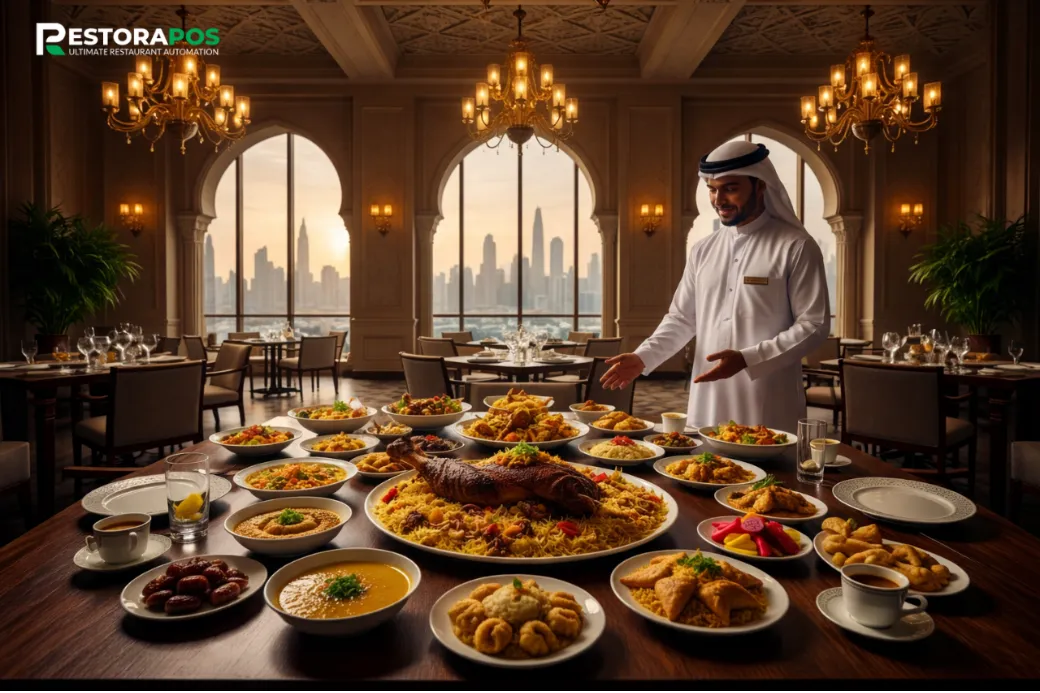
Traditional Emirati food reflects centuries of desert life, sea trade and cultural hospitality unique to the UAE. From savoury slow-cooked meals like Al Machboos to sweet treats like Luqaimat, local dishes tell the story of community gatherings in the majlis, celebrations during Ramadan and Eid, and coastal influences from fishing in Abu Dhabi to spice routes through Sharjah. This guide explores the history of Emirati cuisine, iconic dishes, regional flavours across Dubai and beyond, and where to eat authentic local food in the UAE today.
The History of Emirati Cuisine
Emirati cuisine reflects the rich heritage of the United Arab Emirates. UAE restaurants are shaped by the influences of desert life, coastal trade, and Bedouin traditions. Early dishes relied on dates, rice, wheat, camel milk, and seafood. Over centuries, spice routes linking Arabia with India, Persia, and East Africa introduced flavors like saffron, cardamom, and turmeric.
Today, Emirati food preserves these roots while celebrating hospitality and communal dining as core cultural values. Emirati cuisines are divided into two major eras:
- The pre-oil period.
- The post-oil modernization.
Pre-Oil Period
The Pre-Oil Era refers to the period before the discovery and commercialization of oil. Before oil wealth transformed the UAE, food was shaped by a harsh desert environment and seafaring culture. It is very popular in the Gulf region. However, let's see what people focus on to eat.
- Dates, fish, camel, and goat meat
- Rice and grains are imported through historic trade
- Spices brought via ancient sea routes
It is noted that meals were simmered over coals or clay ovens, designed for nourishment and longevity. Gahwa (traditional Arabic coffee) and dates were served daily in the majlis as symbols of hospitality.
Post-Oil Modernization
After the 1960s, with rapid urban growth in Dubai and Abu Dhabi, international influence expanded local cuisine. Traditional dishes remained central to celebrations and festivals, while global ingredients became more accessible. Today, Emirati food preserves its heritage while adapting to modern tastes.
Traditional Food in the UAE (Emirati Cuisines)
The United Arab Emirates boasts a rich culinary heritage that dates back centuries, reflecting the region's vibrant culture and diverse influences. Traditional Emirati food is a delightful fusion of flavors, textures, and aromas that evoke a sense of warmth and hospitality. Rooted in Bedouin traditions, these dishes have evolved to include influences from Indian, Persian, and North African cuisine, making for a unique and exotic dining experience.
If you are planning to visit any country in the United Arab Emirates like Dubai, you should add trying traditional UAE food to your checklist. You will be able to try most of the traditional dishes in many fine dining restaurants in Dubai. Let’s hunt through some iconic dishes showcasing the United Arab Emirate's gastronomic prowess. And offer insights into the culture and history of this captivating region.
Al Jabab Bread
- Taste: Slightly sweet
- Main ingredients: Flour, eggs
- When eaten: Breakfast
- Ingredients: Flour, eggs, sugar, yeast
Al Jabab Bread is a traditional food in the UAE. It is commonly known as Chabab or Chebab. It is a bread that looks a lot like an American pancake. It is the Emirati version of the American pancake. Emirati pancakes are prepared with wheat or flour, yeast, egg, butter, turmeric, fennel, cardamom, and saffron. It is cooked until both sides are golden yellow or light brown. That is where the name Chabab came from. Then garnished with sesame seeds. It is served hot.
Chabab bread is served with honey, date syrup, and Chami cheese or cream cheese. Chami cheese is a type of traditional Emirati cheese. It is prepared from buttermilk. It tastes salty. Al Jabab Bread is a popular breakfast in the United Arab Emirates.
Khamir Bread
- Taste: Soft, mildly tangy
- Main ingredients: Flour, yeast
- When eaten: Breakfast/tea time
- Ingredients: Flour, yeast, sugar
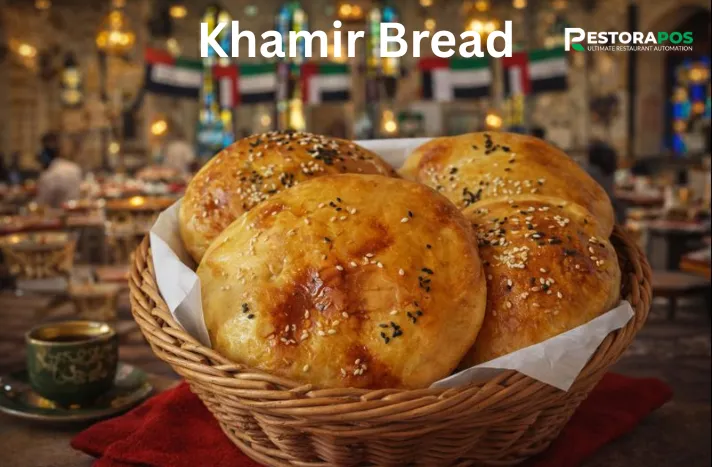
Khamir or Khameer Bread is another traditional food in the UAE. It is a type of breakfast. It is prepared in two different shapes. In some Arabic regions, it is prepared as a flatbread. And in other Arabic regions it is shaped like an American burger bun. It is sweetened with date syrup instead of sugar and milk powder is used instead of liquid milk to boost the taste.
Spices like cardamom and fennel are added to enhance flavor. And turmeric and saffron are used as the coloring agent. Khamir bread is topped or garnished with sesame seeds and prepared in a coal oven.
Khubz Regag
- Taste: Lightly salty
- Main ingredients: Flour, water
- When eaten: Breakfast / with meals
- Ingredients: Flour, water, salt
Khubz Regag or Rigag is a very famous traditional food in the UAE. It is a type of paper like thin crispy bread. It is made with whole wheat, water, and salt. Sometimes it is topped with egg, cheese, date paste or syrup, honey, and many other ingredients while cooking and served as a stand-alone dish. Sometimes it is served as an accompaniment dish with other main dishes.
Balaleet
- Taste: Sweet and savory
- Main ingredients: Vermicelli, eggs
- When eaten: Breakfast
- Ingredients: Vermicelli, eggs, sugar, saffron
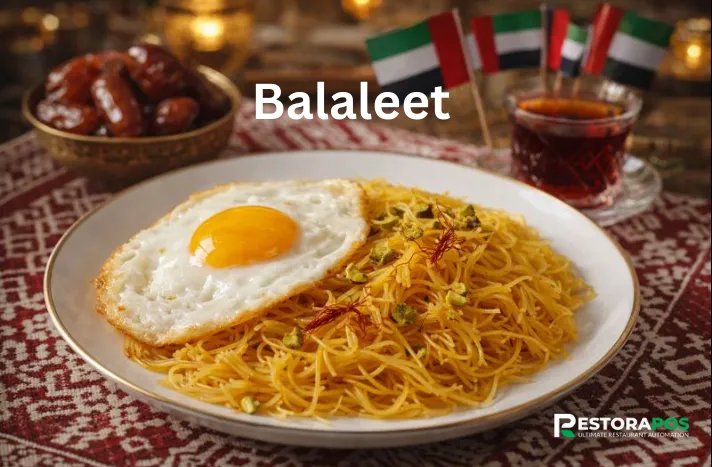
Balaleet is also known as Baleelat. It is a traditional sweet and savory or salty dish. The main ingredient of this dish is vermicelli which is a type of thing and long pasta or noodles. First vermicelli boiled. Then it is cooked with sugar, cardamom, saffron, and rose water or orange blossom. Finally, it is topped with either a flat egg omelet or scrambled egg and garnished with pistachio.
Occasionally, it is served with sauteed potatoes or onions. At times, garbanzo beans which means chickpea and black-eyed beans are added to this dish. Balaleet is served as dessert as well as breakfast. It is eaten cold as dessert and served hot as breakfast.
Balaleet is served as the first meal of the Eid day, especially in Eid-Ul-Fitr in some Arabic regions. It is popular or commonly eaten in Bahrain, Iran (especially in Southern Iran), Kuwait, Oman, Qatar, and Saudi Arabia which is the Eastern Province of the United Arab Emirates.
Shakshuka
- Taste: Spicy and tangy
- Main ingredients: Eggs, tomatoes
- When eaten: Breakfast/brunch
- Ingredients: Eggs, tomatoes, onions, spices
Shakshuka is a traditional food in the UAE that is widely consumed as breakfast in Arabian regions. It is a simple but nutritious dish. The main ingredients of this dish are egg and tomato. There are two ways to prepare Shakshuka. It can be made like a scrambled egg. And also like a poached egg with spices like onion, garlic, pepper, thyme, coriander, bell peppers, etc is sauteed in olive oil with tomato.
When the base is cooked, the egg is cracked into the mixture. Then the frying pan is covered and cooked in a mild heat. Or the egg is scrambled into the mixture to prepare the dish. Finally, basil leaf is used to garnish the dish before serving.
Harees
- Taste: Mild and savory
- Main ingredients: Wheat, meat
- When eaten: Ramadan, special occasions
- Ingredients: Wheat, meat, salt
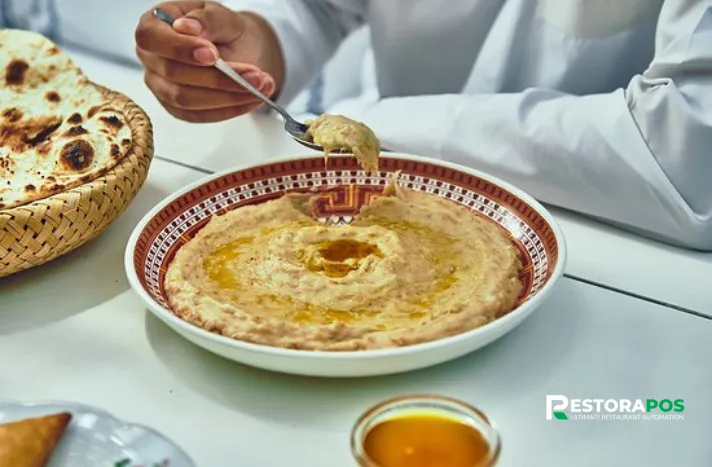
Harees is a traditional food in the UAE also known as Al Harees and Hareeth. It is a dish that has some simple ingredients but it takes a lot of time and effort to prepare this dish. First the wheat cracked and turned into a smooth powder. Then it is soaked in water for several hours. Wheat must be soaked for more than five hours.
In some cases overnight. After that, the wheat is boiled for 3 to 4 hours in a pot with a generous amount of water and salt to taste. When it turns into a thick porridge or gruel-like consistency chunks of meat or minced meat are added and again cooked for another couple of hours.
Usually, chicken, lamb, mutton, and veal which is the meat of a young cow or calf are used to prepare this dish. It is constantly stirred to avoid sticking on the cooking pot and getting burned. Furthermore, spices like chopped onion, garlic, ground cumin, pepper, cinnamon, sugar, and ingredients like coconut milk and ghee or butter are added. Finally, when the dish is ready it is garnished with pistachio and raisins.
Harees take a great deal of time, skill, and labor to be cooked. But it is effortless to digest and easy on the stomach. So it is mostly eaten on Iftar during Ramadan. It is prepared and served at festivals like Ramadans, Eids, wedding functions, etc.
Madroob
- Taste: Savory
- Main ingredients: Fish or meat
- When eaten: Lunch / dinner
- Ingredients: Fish or meat, rice, spices
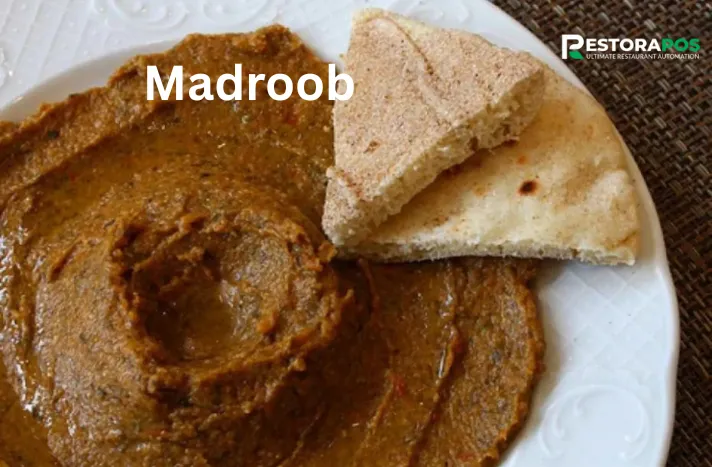
Madroob is another traditional food in the UAE that is a lot similar to Harees. It is also another porridge dish like Harees but instead of wheat, this dish is prepared with rice. Another main ingredient of Madroob apart from rice is meat. Emirati people love to eat lamb, mutton, and camel meat more than goat, beef, and chicken. But in order to prepare Madroob chicken is widely used. Other ingredients of this dish are vegetables and Emirati spices.
Firstly, rice is boiled with water and different spices. Secondly, meat is prepared in another pot with Emirati spices. Thirdly, when the meat is half cooked vegetables are added to the meat curry and cooked until everything is well cooked. Finally, when rice comes to a boil, the meat and vegetable curry are added to the boiled rice. Then the whole dish is beaten with a wooden spoon. And turned into a smooth paste. It takes a lot of time and hard work to be prepared. This is the reason Madroob is not easily found in restaurants.
Madroob is nutritious and delicious at the same time. This dish is consumed during Ramadan as Iftar widely. Because it gives strength after a long day of fasting and also it tastes very good.
Tharid
- Taste: Savory with broth
- Main ingredients: Bread, meat
- When eaten: Ramadan
- Ingredients: Bread, meat, vegetables
Tharid is another famous traditional food in the UAE that is used to break fast during the holy month of Ramadan. It is a complete food that has wheat, meat, and vegetables. It is a stew made with meat like chicken, goat, lamb, or sheep. And roasted vegetables like marrow, potato, pumpkin, tomatoes, etc. Sometimes it is cooked without any meat. Only with vegetables.
Tharid is a stew that is slowly cooked for more than an hour. Cooking slowly for a long time makes the whole dish very soft. So it melts instantly after putting it inside the mouth. It is very rich in spice and is very flavourful. At the same time, this dish is rich in vitamins and protein. It helps the body gain energy after a long day of fasting. That is the reason it is consumed widely on Iftar during Ramadan. This dish is served with Regag bread.
Machboos
- Taste: Rich and spiced
- Main ingredients: Rice, meat
- When eaten: Lunch / dinner
- Ingredients: Basmati rice, meat, spices
Machboos is a traditional food in the UAE that is prepared with rice. This dish is also known as Kabsa. It is a biryani-like Emirati dish. It is very rich in spice and flavor. This dish is prepared with basmati rice and meat. Chicken, goat, sheep or lamp, etc. In some cases, fish or shrimp is also used to prepare this dish.
A special type of spice called Loomi which is dried lime powder is used to prepare this dish. Other spices like bay leaves, nutmeg, saffron, cloves, cardamom, cinnamon, garlic, cumin, chili powder, turmeric powder, coriander powder, fried chopped onions, etc are used to make this dish flavourful and tasty.
This dish is cooked in a single pot. First the meat is cooked and when the meat becomes tender, it is removed and rice is added. After that when rice is almost cooked meat is added and cooked in slow heat for at least two hours. Finally, the dish is garnished with coriander leaves and green chilies.
It is a very delicious meal. This dish is prepared for wedding ceremonies and festivals like Eid and Ramadan. Machboos or Kabsa originated in Saudi Arabia. People of Kuwait, Bahrain, Qatar, the United Arab Emirates, Oman, and Yemen have this dish in their special events.
Quzi
- Taste: Rich and aromatic
- Main ingredients: Lamb, rice
- When eaten: Festivals, weddings
- Ingredients: Lamb, rice, nuts, spices
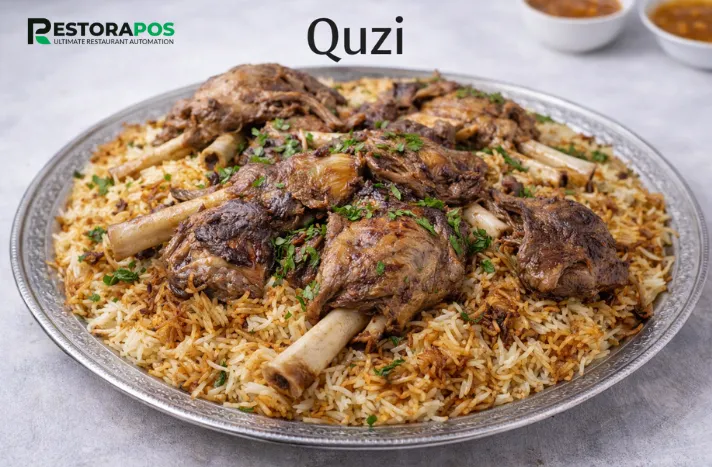
Traditional food in the UAE made with whole lamb or mutton is named Quzi. It is also another dish prepared with rice. And served during family gatherings and festivals. Rice and meat are separately prepared but served together. First the meat is marinated with spices for 24 hours. Meat must be marinated for not less than 8 hours. Then this marinated meat is cooked in low heat for hours. After that meat is removed and the rice is cooked in the same pot into the beef stew.
Finally the cooking process is completed when the rice is fully cooked. And the moisture is dried completely. Now the meat is served in a bed of rice and the whole dish is garnished with nuts and raisins. Quzi is a very delicious dish. You must try this dish if you get the chance to visit Dubai. Restaurants in Dubai are very fancy and they always effectively maintain food safety.
Bonus: Samak Mashwi
Samak Mashwi is a traditional food in the UAE made with fish. It is a grilled fish made with date paste, spices, and herbs. Date paste gives the grilled fish a unique taste. Big and fat fish is used to prepare this dish. First, the fish is marinated for a while and then grilled in an oven made with clay. The oven is filled with burning coal. Then the fish is attached or nailed in a stick unscaled and put inside the oven on the burning coal. Finally, when the fish is cooked, the scales are removed before serving.
This dish has a very unique taste. This dish is easily found in most of the seafood restaurants in Dubai. When visiting Dubai, don’t forget to try this dish if you are a seafood lover.
Conclusion
The traditional food in the UAE is an exquisite blend of indigenous ingredients and flavors. Influenced by Arabian, Persian, and Indian culinary styles. Traditional Emirati food is centered around the unique use of spices, local produce, and time-honored cooking methods. These maintained their essence over generations. Dishes from this culinary tradition include simple yet flavorful ingredients. Such as dates, rice, meat, fish or seafood. These items keep striking a balance between satisfying and also nutritional needs. And indulging in the warm flavors of the desert. This flavorful and aromatic world of Emirati cuisine continues to flourish amidst the constantly evolving global food scene.
Frequently Asked Questions (FAQs)
What Is Traditional Emirati Food?
Traditional Emirati food is considered the authentic cuisine of the United Arab Emirates. Emirati food is shaped by Bedouin desert life, coastal fishing, and ancient trade routes. The UAE's popular dishes include Machboos, Harees, Tharid, Balaleet, and Khubz breads, often prepared with rice, meat, seafood, dates, and aromatic spices.
What Is the National Dish of the UAE?
There is no single official national dish of the UAE, but Machboos and Harees are widely considered national staples of the UAE. Due to their cultural importance and presence during major celebrations such as Ramadan and Eid.
Is Emirati Food Spicy?
Emirati food is generally aromatic rather than spicy. It uses spices like saffron, cardamom, cinnamon, turmeric, and dried lime to enhance flavor without overwhelming heat.
What Traditional Food Is Eaten During Ramadan in the UAE?
During Ramadan, Emiratis commonly eat dishes such as Harees, Tharid, Madroob, Balaleet, dates, and traditional soups for Iftar. These meals are nourishing, easy to digest, and culturally significant.
Where Can I Try Authentic Emirati Food in Dubai?
Authentic Emirati food can be found in traditional restaurants, heritage villages, and cultural centers across Dubai. Many local eateries and Emirati-owned restaurants serve classic dishes like Machboos, Quzi, and Luqaimat.
Is Emirati Cuisine Similar to Other Middle Eastern Food?
Emirati cuisine shares similarities with other Gulf cuisines but is unique due to its use of dried lime (loomi), dates, seafood, and slow-cooking methods influenced by desert and coastal lifestyles.
What Is a Popular Emirati Breakfast Dish?
Popular Emirati breakfast dishes include Balaleet, Al Jabab (Chabab) bread, Khamir bread, and Khubz Regag. These items are often served with honey, date syrup, or traditional cheese.
Is Emirati Food Healthy?
Yes, traditional Emirati food is generally healthy. This is because these foods rely on natural ingredients such as whole grains, lean meats, fish, dates, and spices, with slow-cooking methods that preserve nutrients.
Related Post
View All

How Do You Use the FIFO Method To Restock Food? 09 Convenient Ways


Get a Hassle Free
Restaurant POS Solution
Restora POS provides restaurant management software for all types of restaurants.
Get 30 Days Free DemoStart Your Business Automation with Restora POS